
4th symposium on Whaling and History

april 9th, 2013 | Posted by Sofia Rickberg in - (Kommentering avstängd)

Hvalfangstmuseet
The Whaling Museum in Sandefjord, Norway, is host to the Fourth Symposium on Whaling and History in June 2013. 18 papers will be presented by speakers from 13 countries. They cover a wide variety of fields and will in many instances present new material and analyses. Among these are scientists Dag Aavango, Peder Roberts and Julia Lajus from the Mistra Arctic Futures project Assessing Arctic Futures. Voices, resources and governance.

On the second day of the conference the following lectures are presented by scientists from the Mistra Arctic Futures programme:

10.45-11.20
Dr. Dag Avango, Div. of History of Science, Technology and Environment, Royal Institute of Technology, Stockholm, Sweden: Constructing Pasts for Polar Futures: The Use of History and Heritage in Arctic and Antarctic Geo-politics.

13.00–13.35
Dr. Peder Roberts, Royal Institute of Technology, Stockholm, Sweden: The friend who outstayed his welcome? Johan Hjort and the Norwegian whaling industry.

13.35-14.10
PhD, Director, Julia Lajus, Center for Environmental and Technological History, European Unversity at St. Petersburg, Russia: “Chiudo-iudo” – the Russian leviathan: attitudes towards whales and whaling in the Russian north, end of the 19th century.

The Whaling Museum in Sandefjord aims at being one of the major institutions presenting material connected to the history of whaling in a broad perspective.

Download the full programme of the conference here.

Geography of Tourism, Leisure, and Global Change

april 29th, 2013 | Posted by Sofia Rickberg in - (Kommentering avstängd)

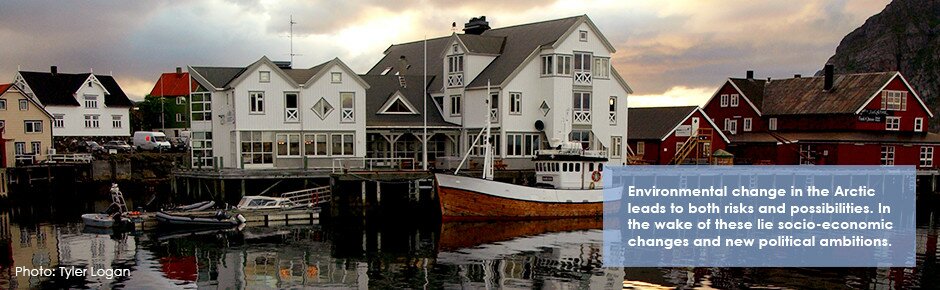
Photo: Tyler Logan

Dieter Müller of the Mistra Arctic Futures project From Resource Hinterland to Global Pleasure Periphery? is chairing the commissioned session Geography of Tourism, Leisure, and Global Change at the 2013 International Geographers Union (IGU) Regional Conference.

He is also chairing the session Tourism and regional development: Tourism is commonly looked on as having favourable economic and social impacts, introducing new, external sources of income and opportunities for work. In the context of a core-periphery system, tourism can transfer wealth from the richer urbanised areas to the poorer peripheral regions and it can also act as a promoter of modernisation in less-developed regions. As a result, tourism is widely used in regional development processes and projects, especially in peripheral areas which have faced major challenges in the past decades. However, the desired goals of community and regional development are not always met in tourism which may also have social, economic and environmental costs. This session aims to discuss the challenges of the economic transition process of peripheries towards tourism and the complex relationships between tourism, regional development and local communities.


European Society for Environmental History 2013

april 9th, 2013 | Posted by Sofia Rickberg in - (Kommentering avstängd)

ESEH13 ConferencelogoThe Seventh Biennial Conference of the European Society for Environmental History will be held in Munich, Germany from 20-24 August 2013. The topic of the conference is ‘Circulating Natures: Water – Food – Energy.’

Scientists from the Mistra Arctic Futures project Assessing Arctic Futures. Voices, resources and governance are well represented in the conference programme, together with many other Swedes.

Download the full preliminary programme here.